Mapping Loyalty Incentives to Strategic Choices in Mobile Planning Sessions
Écrit par Blake Schulz · 30/8/2026
Mapping Loyalty Incentives to Strategic Choices in Mobile Planning Sessions
Analysts track how loyalty structures connect directly to patterns of user selection during mobile-based strategy activities, with data streams revealing consistent correlations between reward tiers and time spent on specific planning modules. Research from the European Commission on digital services indicates that users in portable environments adjust their session lengths based on accumulated points, often extending interactions when bonus thresholds appear within reach. Figures from industry reports show that by August 2026 mobile sessions incorporating loyalty layers had increased average engagement durations by measurable margins across multiple platforms.
Core Mechanisms Linking Rewards to Choices
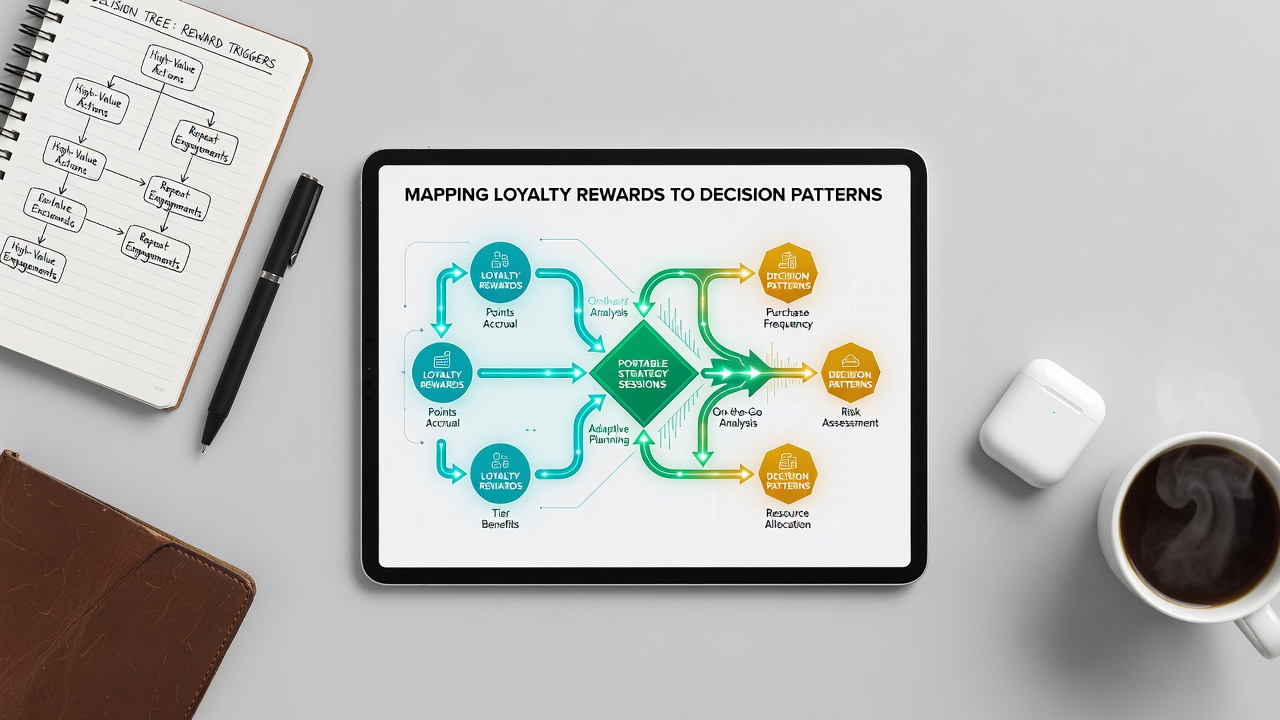
Portable strategy sessions operate through interfaces that log every selection, from resource allocation to risk assessment steps, while loyalty programs assign values to those same actions in real time. Data collected by research institutions demonstrates that participants frequently prioritize options granting immediate point multipliers even when alternative paths offer higher long-term efficiency. Observers note that this mapping occurs because algorithms surface reward notifications at decision nodes, prompting users to recalibrate their approach mid-session. Studies conducted at universities in Canada have documented cases where loyalty prompts shifted choices toward conservative options once users neared redemption levels.
Data Patterns Observed Across Devices
Telemetry from various applications reveals that tablet users exhibit different reward-response curves compared with smartphone participants, largely due to screen size influencing how quickly loyalty meters become visible. Reports from the Australian Institute of Health and Welfare on digital engagement patterns highlight that sessions lasting beyond twenty minutes show stronger ties between accumulated rewards and repeated selection of the same strategy branch. Those patterns emerge because the system reinforces earlier decisions through escalating point values, creating feedback loops that researchers can quantify through sequence analysis.
One study revealed that users who receive progress updates at regular intervals maintain steadier decision sequences, whereas those without such feedback tend to experiment more widely before settling on a path. What's interesting is how these updates function as anchors, keeping participants aligned with reward-optimal routes even when external variables change during the session.
Regional Variations in Implementation
Platforms operating under different regulatory frameworks display distinct approaches to integrating loyalty elements with strategy tools. In North American markets operators emphasize visible progress bars tied to decision outcomes, while European services focus on tiered access to advanced planning features unlocked by point totals. According to data compiled by the Canadian Centre on Substance Use and Addiction, these variations produce measurable differences in how long users remain within a single session before switching tasks or closing the application.

Industry associations such as the World Lottery Association have compiled comparative datasets showing that reward density affects choice consistency, with denser systems producing more predictable sequences. Researchers at institutions in Australia continue to examine how these densities interact with device battery levels and network conditions, both of which alter the timing of reward notifications and therefore the moment users commit to particular strategies.
Analytical Tools Used for Mapping
Specialized software processes session logs by aligning timestamped decisions with corresponding loyalty events, generating heat maps that highlight clusters of activity around reward thresholds. Government statistical agencies in several regions supply anonymized datasets that allow independent verification of these alignments, confirming that certain decision branches receive disproportionate attention once loyalty indicators activate. The process relies on sequence mining algorithms rather than simple frequency counts, enabling analysts to trace how one choice influences subsequent options through teh reward layer.
Turns out the mapping process also accounts for session interruptions, because users who resume after a pause often return to the exact decision node where a reward was last displayed. This resumption behavior creates additional data points that strengthen the overall correlation between incentive structures and strategic persistence.
Future Developments Projected for Late 2026
By August 2026 several platforms plan to introduce adaptive loyalty weights that change according to aggregate decision patterns observed across user cohorts. Preliminary models suggest these weights could refine the mapping process further, allowing real-time adjustments that respond to emerging trends without requiring manual intervention. Research papers from academic sources indicate that such adaptations may reduce variance in choice sequences while maintaining user autonomy over final selections.
Conclusion
The systematic connection between loyalty rewards and decision patterns in portable strategy sessions rests on continuous data collection and algorithmic alignment of incentives with user actions. Evidence from multiple regulatory and research bodies demonstrates that these connections produce observable, repeatable sequences across devices and regions. Continued refinement of analytical methods will likely yield clearer models of how reward systems guide choices within mobile environments, supporting more precise understanding of session dynamics without altering the underlying strategic objectives participants pursue.